

Exercise Progression and Knee Pain

CATEGORY: EXERCISE
Exercise Progression and Knee Pain
Exercise progression describes the way in which the body is progressively overloaded or worked in order to achieve specific gains or outcomes.
Exercise progression is utilised widely in physiotherapy sessions from injury rehabilitation to improving movement quality, range and overall function and performance. It is a key component of physiotherapy for almost every population we see – from athletes to weekend warriors, children, and everyday people!
When we are little, we don’t master a jump before we master walking.
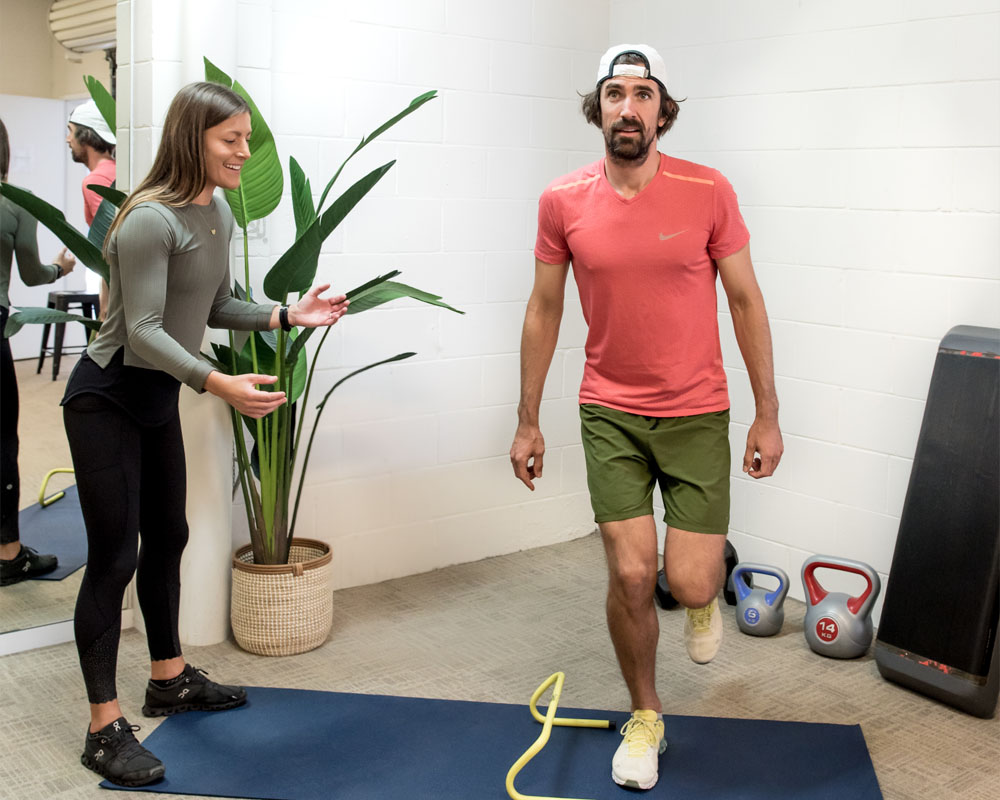
One element of physiotherapy is functional movement analysis. Physiotherapists are expertly trained in identifying suboptimal or dysfunctional movement – that is, we know how joints and the body are meant to move which makes it easy to see when movement is dysfunctional or non-ideal. Functional movement analysis involves looking at your body and analysing how it moves during specific tasks which are relevant to your injury or concern.
For example, squatting – if you’re experiencing pain when standing up or sitting down, we will get you to squat to see what happens to your body and if this reproduces your pain. What we are looking for is exactly what your body does and how it moves throughout this task as, if it is provocative (i.e. brings about your pain) we will be able to identify suboptimal movement which could be the cause or a contributing factor to your pain. We will be ‘zooming in’ and ‘zooming out’ on your body and looking at not only the area of pain or concern but we will be analysing your body as a whole.
So, in the squatting example, can you squat with correct form and control? Do you have an imbalance in your knee control? Are you shifting your body weight to one side? Is that old ankle injury affecting how you move? Movement analysis highlights any muscular imbalances and areas that need to be addressed to manage pain and prevent further injury.
When returning from a knee injury, clients undergo a graded return to exercise. Physiotherapy will begin with isolated muscle exercises which will typically involve the body staying relatively still in a seated position in a chair or on a bed or couch. In this phase of rehabilitation, we are focussing on activating specific muscles or moving joints in order to rehabilitate a specific area or muscle group.
You will then progress into weight bearing static exercises which will involve standing up and activating specific muscle groups or moving / exercising in a single plane of motion which again, focuses on a specific area or group or muscles. From there we add in more functional movement and rehabilitation which involves moving multiple areas of the body at once through different planes of motion (mimicking everyday movement / tasks). Then, depending on your individualised goals and if you are returning to sport, we may add in specific plyometrics (jumping based exercises) and running drills. Then we will implement sport specific tasks in order for you to be able to return to full training and back onto the field.
WHAT?
Say you sustained a knee injury at your gym when participating in a HIIT class and you decide to come in to see us for physiotherapy. Following an assessment and some treatment, your pain has settled down, so you assume the issue has gone away and despite what your physio has said, you return to your class soon after. You then perform the same movement again and the pain returns so you come back in the following week frustrated as your symptoms are back. If we don’t address your form and control doing functional exercises like squats, lunges or box jumps then your knee pain is likely to return and continue long term.
We need to look at WHAT is causing your pain
WHY?
The next step is looking at the movement that is causing you pain and breaking down why you are getting the pain. Is it in the squat, the lunge, the jump, the landing? Is it due to muscular weakness, joint pain, or compensation? At this point we will get you to perform a wide range of tasks, assessing your movement. This allows us to then give you a structured program which may involve strengthening, proprioception, balance or stretching exercises so that you can perform the movement pain free.
NEXT?
Exercises will start gradually with focus on control and form, we then progress the load in a controlled position. From there, your physiotherapist will add in the jumping component to address your control under load.
At Alchemy in Motion knee pain is a common complaint seen within the clinic. Poor squat and lunge technique in addition to suboptimal control with jumping and landing are the main contributors to pain and injuries sustained.
If you are fed up with your niggling pain, are limited at the gym or shy away from certain exercises or movements, maybe it’s time to get a full functional assessment and see how we can help you to continue to stay pain free and active!
Leave a Comments
You must be logged in to post a comment.