

PREDIABETES & TYPE 2 DIABETES (T2DM)
Understanding Blood Glucose and Insulin Resistance
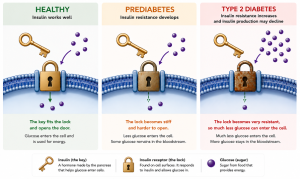
Your body turns the food you eat into glucose (sugar), which is used for energy. Insulin, a hormone produced by the pancreas, acts like a key, helping glucose move from the bloodstream into the body’s cells. You can think of the cells as having tiny locks on their surface that insulin helps open. When this system works well, blood glucose levels stay within a healthy range. However, when the body becomes less responsive to insulin, glucose has more difficulty entering the cells and begins building up in the bloodstream.
What is Prediabetes?
Prediabetes is a condition where blood glucose levels are higher than normal, but not yet in the diabetes range. In prediabetes, the body starts becoming less responsive to insulin (insulin resistance), making it harder for glucose to move efficiently into the cells. As a result, glucose begins building up in the bloodstream.
Many people with prediabetes have no noticeable symptoms and may only discover it through routine blood tests. Without intervention, prediabetes can progress to type 2 diabetes over time.
The good news is that healthy lifestyle changes can often improve blood glucose levels and significantly reduce the risk of developing type 2 diabetes.
What is Type 2 Diabetes?
Type 2 diabetes develops when the body becomes less responsive to insulin and/or the pancreas cannot produce enough insulin to keep blood glucose levels within a healthy range. This makes it harder for glucose to move from the bloodstream into the body’s cells, causing blood glucose levels to rise over time. Type 2 diabetes is the most common form of diabetes and often develops gradually over many years.
Symptoms may include:
- Dry mouth
- Increased thirst
- Frequent urination
- Fatigue or low energy
- Blurred vision
- Increased hunger
- Slow wound healing
- Recurrent infections
- Unexplained weight changes
Why Does Blood Glucose Matter?
Glucose is the body’s main source of energy and comes from the foods we eat, particularly carbohydrates. However, consistently high blood glucose levels can damage blood vessels and nerves throughout the body over time.
This may increase the risk of:
- Heart disease and stroke
- Kidney disease
- Nerve damage (neuropathy)
- Eye disease and vision changes
- Poor wound healing
- Increased infection risk
The positive news is that even small lifestyle changes can help improve how the body responds to insulin and support long-term health.
Nutrition and Lifestyle Management
There is no single “diabetes diet,” and managing prediabetes or type 2 diabetes does not require cutting out all carbohydrates.
Instead, the focus is on building balanced, sustainable habits that support more stable blood glucose levels and overall health.
Understanding Carbohydrates
Carbohydrate foods include breads, cereals, grains, rice, pasta, fruit, milk and yoghurt, legumes, and starchy vegetables such as potato, sweet potato, and corn. Although carbohydrates are often misunderstood in diabetes management, they are still an important source of energy and should form part of a balanced eating pattern.
Different carbohydrate foods affect blood glucose differently depending on the amount eaten, fibre content, processing, cooking methods, and what foods they are eaten with.
Higher fibre and less processed carbohydrate foods are generally digested and absorbed more slowly, which may help support steadier blood glucose levels throughout the day.
Key nutrition and lifestyle strategies include:
- Eating balanced meals with lean protein and plenty of non-starchy vegetables
- Choosing high fibre and lower GI carbohydrates
- Spreading carbohydrate intake more evenly across the day, in appropriate portions
- Choosing minimally processed foods where possible
- Drinking water regularly and limiting sugary drinks
- Maintaining a healthy weight where appropriate
- Prioritising sleep and stress management
- Including regular physical activity to help improve insulin sensitivity
Foods to Emphasise:
- Non-starchy vegetables
- Wholegrains such as oats, brown rice, and quinoa
- Legumes including beans, lentils, and chickpeas
- Lean protein sources such as fish, eggs, tofu, yoghurt, and lean meats
- Healthy fats including olive oil, avocado, nuts, and seeds
- Fruit in appropriate portions
Foods and Drinks to Limit:
- Sugar-sweetened drinks including juice, soft drinks and energy drinks
- Highly processed snack foods high in added sugars or refined carbohydrates
- Frequent takeaway and fast foods high in saturated fat and salt
- Large portions of refined carbohydrates such as white bread, pastries, and sweets
- Excess alcohol intake
Consult With a Dietitian
Managing prediabetes or type 2 diabetes can feel overwhelming, especially with the amount of conflicting nutrition information available online. An Accredited Practising Dietitian (APD) can help simplify diabetes management by providing practical, evidence-based advice tailored to your health needs, lifestyle, medications, culture, and food preferences.
A dietitian may assist with:
- Improving confidence around food choices
- Meal planning and carbohydrate education
- Blood glucose management strategies
- Weight management support
- Supporting cholesterol and blood pressure management
- Building sustainable long-term habits
Ready to take the next step in your health journey? Book a consultation today to receive personalised nutrition support tailored to your goals and lifestyle.