

Dry Needling

CATEGORY: SPORTS & MUSCULOSKELETAL
Dry Needling
What is Dry Needling and How Can it Help Sports Injuries?
Unlocking the Power of Dry Needling for Sports Injuries
‘Athletes’ of all levels, from weekend warriors to elite competitors, are no strangers to muscle soreness, tension, and injuries. When pain and dysfunction arise, physiotherapy is often the first line of defense, offering a range of evidence-based treatments to aid recovery. One such technique that has gained traction in recent years is dry needling. But what exactly is dry needling, and how can it help with sports-related injuries? Let’s dive in.
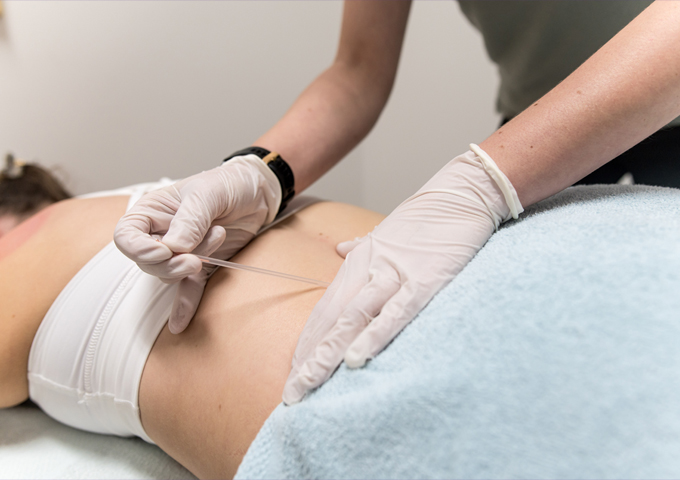
Dry needling is a treatment technique used by qualified physiotherapists, osteopaths and myotherapists to target areas of pain in our myofascial system, these are sometimes referred to as knots or tight bands in muscles that can contribute to pain and movement restrictions. Unlike acupuncture, which is rooted in traditional Chinese medicine and aims to balance energy flow, dry needling is based on Western medicine principles. It involves inserting fine, sterile needles into specific muscle areas to elicit a twitch response, which helps release muscle tension, improve blood flow, and reduce pain.
For athletes, injuries often stem from overuse, muscle weaknesses, or sudden trauma. Dry needling can be particularly effective in addressing:
- Muscle Tightness & ‘Knots’: Overworked muscles can develop into stiffness and discomfort. Dry needling helps ‘reset’ the muscle, allowing for better flexibility and movement.
- Pain Management: By reducing muscular tension and promoting circulation, dry needling can help alleviate acute and chronic pain.
- Enhanced Recovery: Post-exercise soreness and fatigue can be reduced, speeding up recovery and allowing athletes to return to training faster.
- Improved Range of Motion: Restricted movement due to tight muscles can hinder performance. Dry needling assists in relaxing tight areas, improving overall mobility.
- Injury Prevention: Regular treatment can help identify and address muscle imbalances before they lead to serious injuries.
Where is Dry Needling Indicated?
Dry needling is commonly used to treat a variety of sports-related injuries, including:
- Muscle strains (e.g., hamstring, calf, or quadriceps strains)
- Tendonitis and tendinopathies (e.g., Achilles tendinopathy, tennis elbow)
- Shin splints
- Plantar fasciitis
- Neck and back pain
- Rotator cuff injuries
- Chronic tension headaches related to muscular tension
The Evidence Behind Dry Needling
Here at alchemy, we always justify our treatment with evidence and it’s important fo us to question the reliability of our interventions.
Whilst there is scepticism regarding the evidence behind dry needling, not only is there excellent anecdotal feedback from our patients but formal research suggests that dry needling can be an effective treatment for musculoskeletal pain and dysfunction. Studies indicate that dry needling, when combined with physiotherapy interventions such as exercise and education, can enhance treatment outcomes.
This is much more prominent in the short-mid term,
1. Exercise & Dry Needling: While dry needling provides immediate relief, incorporating strength and mobility exercises ensures long-term benefits.
2. Education & Dry Needling: Understanding movement patterns, posture, and injury prevention strategies plays a crucial role in recovery. Physiotherapists educate patients on how to modify training loads, optimize movement mechanics, and implement self-care strategies to prevent future injuries with the aid of dry needling.
If you would like to look into this further, please have a read of the following studies, all of which are systematic reviews which is widely considered the highest form of evidence.
1. Nuhmani, S. et al. (2023) ‘Dry needling in the management of tendinopathy: A systematic review of Randomized Control Trials’, Journal of Bodywork and Movement Therapies, 33, pp. 128–135. doi:10.1016/j.jbmt.2022.09.021.
2. Kużdżał, A. et al. (2025) ‘Dry needling in sports and Sport Recovery: A systematic review with an evidence gap map’, Sports Medicine [Preprint]. doi:10.1007/s40279-025-02175-9.
3. Para-García, G. et al. (2022) ‘Dry needling alone or in combination with exercise therapy versus other interventions for reducing pain and disability in subacromial pain syndrome: A systematic review and meta-analysis’, International Journal of Environmental Research and Public Health, 19(17), p. 10961. doi:10.3390/ijerph191710961.
4. Giorgi, E. et al. (2022) ‘The effectiveness of dry needling combined with therapeutic exercises in treating tendinopathy conditions: A systematic review’, Journal of Sport Rehabilitation, 31(7), pp. 918–924. doi:10.1123/jsr.2021-0200.
Final Thoughts
Dry needling is a powerful tool in the physiotherapist’s toolkit, offering relief from sports injuries and muscular discomfort. However, it is most effective when used in conjunction with other treatment approaches like exercise, manual therapy, and patient education. If you’re struggling with a sports-related injury or persistent muscular pain, consulting a qualified physiotherapist, osteopath or myotherapist can help determine if dry needling is right for you.
Ready to get back in the game and enhance your recovery? Book an appointment with our experienced therapy team today!
Who to See
Alex Hancox – Physiotherapist
Rebecca Wood – Physiotherapist
Grace Gleeson – Physiotherapist
Liam Neyland – Osteopath
Dawn Rasario – Myotherapist
Leave a Comments
You must be logged in to post a comment.